Here is a Self-Learning Module (SLM) for Plant Biotechnology that can be used for school or college study. 🌱🔬
Self-Learning Module (SLM): Plant Biotechnology
1. Introduction to Plant Biotechnology
Plant biotechnology is a branch of Biotechnology that uses scientific techniques to modify or improve plants for agriculture, medicine, and industry. 🌾
It involves using cells, tissues, and genetic material of plants to produce improved varieties with desirable traits such as:
-
Higher yield
-
Disease resistance
-
Drought tolerance
-
Better nutritional value
Plant biotechnology combines knowledge from Genetics, Molecular Biology, and Plant Physiology.
2. Objectives of the Module
After completing this module, learners will be able to:
-
Define plant biotechnology.
-
Explain the concept of Plant Tissue Culture.
-
Describe the steps involved in plant tissue culture.
-
Identify applications of plant biotechnology in agriculture.
-
Understand the advantages and limitations of biotechnology in plants.
3. Basic Concepts
3.1 Plant Tissue Culture
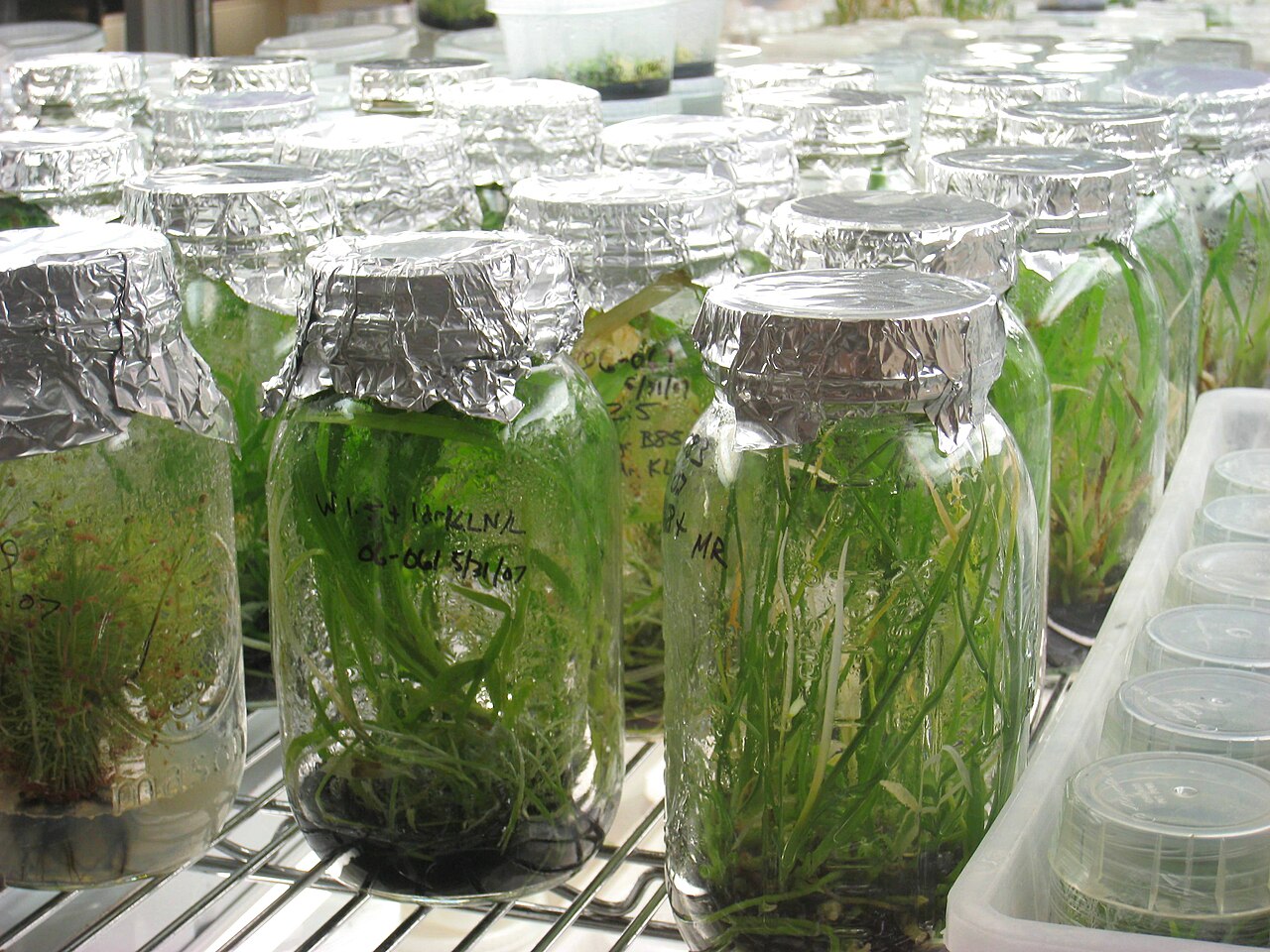
Plant Tissue Culture is the technique of growing plant cells, tissues, or organs in a sterile nutrient medium under controlled laboratory conditions.
Key Components
-
Explant – Small part of a plant used for culture.
-
Culture medium – Nutrient solution containing minerals, vitamins, and hormones.
-
Sterile environment – Prevents contamination by microorganisms.
3.2 Principle of Tissue Culture
The principle behind plant tissue culture is Cell Totipotency.
This means:
👉 Every plant cell has the ability to develop into a complete plant under suitable conditions.
4. Steps in Plant Tissue Culture
1️⃣ Selection of Explant
A small plant part (leaf, stem, root, or bud) is selected.
2️⃣ Sterilization
The explant is disinfected to remove microorganisms.
3️⃣ Preparation of Culture Medium
A nutrient medium such as Murashige and Skoog Medium is prepared.
4️⃣ Inoculation
The sterilized explant is placed on the nutrient medium in sterile conditions.
5️⃣ Callus Formation
Cells divide and form an unorganized mass called callus.
6️⃣ Plantlet Formation
Callus develops into shoots and roots.
7️⃣ Hardening
Plantlets are gradually adapted to natural environmental conditions.
5. Applications of Plant Biotechnology
1. Crop Improvement
Development of improved crop varieties such as Golden Rice with enhanced nutrition.
2. Disease-Free Plants
Tissue culture helps produce virus-free plants like:
-
Banana 🍌
-
Potato 🥔
-
Sugarcane 🌾
3. Rapid Plant Propagation
Large numbers of plants can be produced in a short time.
4. Production of Secondary Metabolites
Plants produce useful compounds used in medicines and cosmetics.
5. Conservation of Rare Plants
Helps preserve endangered plant species.
6. Advantages of Plant Biotechnology
✅ Rapid multiplication of plants
✅ Production of disease-free plants
✅ Year-round production
✅ Improvement of crop quality
✅ Conservation of endangered plants
7. Limitations
❌ High cost of laboratory setup
❌ Risk of contamination
❌ Requires skilled personnel
❌ Some plants are difficult to culture
8. Self-Assessment Questions
A. Short Answer
-
Define plant biotechnology.
-
What is an explant?
-
Explain the principle of cell totipotency.
B. Long Answer
-
Describe the steps involved in plant tissue culture.
-
Discuss the applications of plant biotechnology.
C. Multiple Choice Questions
-
The ability of a plant cell to form a complete plant is called:
a) Mutation
b) Totipotency
c) Hybridization
d) Transformation -
Which medium is commonly used in plant tissue culture?
a) Agar medium
b) Murashige and Skoog medium
c) Soil medium
d) Sand medium
9. Summary
Plant biotechnology is an important field that helps improve crop productivity and sustainability. Techniques such as Plant Tissue Culture allow scientists to produce large numbers of plants quickly and develop improved plant varieties.
✅ If you want, I can also create:
-
A full 10–15 page SLM format (for B.Sc./M.Sc.)
-
SLM with diagrams and figures
-
Assignment + answer key for plant biotechnology.
- Teacher: Admin User